Search Results
Search this site
28 results found with an empty search
- On..."I Knew It, I Knew You," Part II
Welcome to Part II of my thoughts on "I Knew It, I Knew You," Taylor Swift‘s original song for Toy Story 5! If you know me, you know that Taylor Swift and Disney/Pixar are two of my favorite things in the world. (All I need now is a Starbucks collab drink based on the song in the movie and I’d have the trifecta...) Ever since this collaboration was announced, I’ve been having All The Thoughts. And: practice what you preach. One of the main, foundational ideas of my course is that "writing is thinking and thinking is messy." So, rather than write one, long, unwieldy post, I took a break, walked away, walked-and-talked through my thoughts, and started a new post. Part I was a little bit longer than I expected but I tried to cover Pixar‘s relationship with music in its films; music in the Toy Story films, specifically the Oscar nominated songs; and some of my initial impressions and observations about the lyrics of this one. Now comes the synthesis part: taking all the pieces, putting them together, and trying to make some sort of sense of them. As I said in my last post, this is all just "academic fun," pure speculation, a thought exercise. But I do think we can theorize about (1) where this song might fit in the film and (2) how this song might reflect or connect to the overall plot. I. My Best Guesses I wanted to start by briefly listing my "most likely scenarios" so far, and then I'll get into why. This is by no means an exhaustive list; just my best guesses based on the song lyrics and what we know about the plot of the film from interviews, trailers, and promotional clips. IMO, the song could be: at the "emotional heart" of the film -- much like in Toy Story 2, about midway through the film -- as Jessie returns to Emily's house and remembers their relationship at the "emotional heart" of the film, if Jessie and Older Emily reunite at some point in the film, as Jessie finds a new purpose with a new kid (maybe Blaze?) at the structural climax of the film -- near the end, but not the end credits -- where Jessie & the Toys return to Bonnie At this point, my best / favorite guess -- partly because of what it could mean for the message of the film -- is the last one. Let's get into why. II. The First Trailer JK. Before that, I want to include the first full-length trailer for the movie, from a few months ago, as I think it's actually quite revealing about the overall arc of the film (and maybe where Taylor's song fits in): From the trailer, the basic plot structure seems to be: Bonnie still has an "analog" childhood, playing with toys + imagination, but might be alone in that ➡️ She might be having trouble making friends in general, or with the new kids in the neighborhood, who all have "iPads" ➡️ Bonnie's parents, probably to help Bonnie, get her an iPad ➡️ Bonnie becomes engrossed with it, forgetting about her toys ➡️ The central tension between Toys and Tech is established -- as Woody says, "Toys are for play, but tech is...for everything." ➡️ Jessie reaches out to Woody, who returns home and...makes things worse? ➡️ We see Lilypad say "so long toys!" after what looks like lines of code appear on her screen, then we cut to Jessie + Bullseye in a car, with Bonnie and a suitcase (backpack?) in the background -- this might be a sleepover, as we see Bonnie in the same shirt from outside the window of a house, at night ➡️ This is where the trailer starts picking up, putting together brief shots of scenes, quickly moving from one to the next, but the basic gist is that Jessie ends up (somehow) at Emily's old house, realizes "Bonnie still needs us," and then has to make it back home to Bonnie. ➡️ Also, at some point, the toys end up in a (donation?) box in the garage, and Buzz and Woody escape (I think to follow Jessie and/or let her know that Bonnie isn't as happy as maybe Jessie thought she was). Worth noting: I think the scene at the beginning of the trailer may actually occur at the end of the film, rather than the beginning, as it's supposed to look like. When we see Bonnie playing with the toys outside, she's wearing an outfit with turquoise puff sleeves and a purple long-sleeved shirt underneath. When we see her opening the iPad, she's wearing a yellow long-sleeved shirt with a mint shirt on top, and a pink skirt. The trailer is cut to look like Bonnie abandons her outdoor, imaginative play to open the iPad, but unless she pauses for a costume change, that might not be the case. (This would also mean that Forky and Karen's wedding occurs later in the film, so I'm not entirely sure about this theory.) III. What Else Do We Know? As we get closer to the release date of the movie, we're starting to get more information about the film, mainly from interviews with people involved in it, some of which I think are really telling. Tom Hanks says there's "heartbreaking scene" in this film, related to tech, per The Hollywood Reporter. Lily Ford reports that, speaking at the UK launch event, Tom Hanks said, "There’s one of the most heartbreaking scenes I’ve ever seen in any of the Toy Story movies — when that little girl is getting her feelings hurt by what other people are texting about her, and she doesn’t understand why. She doesn’t know what she did wrong, but it hurts, and that is a very prescient thing to have in a motion picture today about little kids and toys, don’t you think?” This, I think, is crucial: this might be the catalyst for Jessie to return home. She might leave (or be forced to leave), thinking Bonnie is happier with her technology; but after this incident, maybe Bonnie turns to Jessie for comfort, and is unable to find her, prompting Woody & Buzz to bring her back. Tech -- i.e., Lilypad -- is not the villain. Andrew Stanton told Variety: "She is [the villain] to the toys because they’re understandably intimidated...She’s just the next phase in Bonnie’s life. She’s built like a toy in the sense that she wants to help the kid go forward, but she’s got very different skills and zero experience..." On a similar note, McKenna Harris (the co-director) revealed: "Lots of people at the studio wanted her to be a villain, and it was so hard to strike the balance because I think we all come in with such loaded emotions towards devices. At the end of the day, it never made sense. We’re not getting rid of these devices, no matter how hard we try. I’m always going to have my phone. I’m probably going to be partially addicted to it. So it felt right for the toys to have to grapple with that nuance." If tech isn't the villain -- the antagonist, yes; villain, no -- and the toys "have to grapple with that nuance," I can see the "villain" (in true Pixar fashion) being the kids' relationship with technology, and its effect on their social skills and relationships (something like cyber-bullying, but maybe not as heavy). We know that Jessie returns to where Emily lived, but Emily isn't there. In this same Variety article, we learn that: "In the film, Jessie finds herself returning to her former home. Except, Emily doesn’t live there anymore.[...] Jessie’s storyline promises to be an emotional one as she is forced to reckon with some memories of the house, Emily and issues of abandonment." This seems like it might be the "emotional heart" of the film, where Jessie has to address her past and those "issues of abandonment" -- because if Variety only saw the first 30-45 minutes, we must get to this part fairly quickly. Either way, it seems Jessie is going to have to grapple with some stuff, much like Woody did when he first arrived at Bonnie's house in Toy Story 3. Living in Jessie's house is a new family, and the character of Blaze seems central to Jessie's story. (c) Disney Wiki This is from Disney Wiki, and has 2 interesting pieces of information. The first is that they identify Blaze as a "millennial" which -- what!? I have questions. Is Blaze actually a Millennial? Because the youngest of us were born in ~1996 so would be about 30. If she's not a Millennial, can we please stop identifying all younger generations as Millennials? Please? (I know this is on the Wiki, not Disney/Pixar, but still.) If she is one, I'm not sure how I feel about the larger commentary here on Millennials and toys. As Entertainment Weekly reports, we learn: ...Blaze "and her family live on a ranch in the same home where Jessie and her first owner Emily used to live"; ...that Blaze is, according to her voice actress Mykal-Michelle Harris, "a spunky, funky, equestrian horse girl" [Sidebar: LOVE that description] ...that Blaze "was raised on a ranch with her family, and she's never afraid to be herself. She's an older kid, but she's not afraid to play with toys or to have a whole bunch of horse figurines. That's kind of her thing.” So, yes, it seems unlikely that Blaze is a Millennial as Harris calls Blaze an "older kid." Even though Disney Wiki also calls Blaze "a young girl whom Lilypad sent Jessie to." Interesting. There is the moment in the trailer where see boxes of code pop up, and then there's the glimpse of "eBid" (a version of Ebay?) from the final trailer, so it seems like maybe Lilypad puts Jessie up for sale online? (I have questions about the follow-through of that, if that's the case...) Leaving logistical questions aside, I can see this also setting up Lilypad's "redemption arc": if Bonnie is hurt via tech (the text chain we see a glimpse of Lilypad's screen), then Lilypad may be like Inside Out 2's Anxiety, who means well, but doesn't know how to help -- something alluded to in the quote above. Lilypad could then use her "powers for good," helping Buzz and Woody and the rest of the toys get to Jessie to bring her home to Bonnie. Finally, Blaze does not seem to be related to Emily. One of my initial theories was that Emily, while not living at the house anymore, may have still owned it, or passed it down to her kids -- something that allowed an older version of Emily to exist in the world of the film. This was mainly because of the prominence of the house/setting in the Taylor Swift promotional materials, and may have hinted at Taylor voicing either Young Emily (in a flashback) or Current, Older Emily in the present-day of the film. But Blaze is, if this Instagram post is correct, half-Black and half-Armenian, which means a biological connection to Emily seems unlikely. It could still be there! Maybe Emily married someone Black or Armenian, and their kid married someone Armenian or Black; maybe she adopted; but it could also be that Emily grew up, moved away, and a new family bought the ranch and house. [Sidebar: The Instagram caption reveals a few interesting pieces of information -- and also identifies Blaze as 8, and an interview between TheGrio and McKenna Harris she's 9, so who knows, namely that Blaze is an "aspirational friend," is mixed race, has curly hair that a "culture trust of Black colleagues" at Pixar consulted on for authenticity, and Pixar developed new animation technology to accurately represent her hair. I LOVE ALL THOSE THINGS.] III. Final Hypothesis All of this leads me back to my final best guess for where Taylor Swift's song appears in the film. I don't think it will appear in a similar place as Sarah McLachlan's "When She Loved Me" from Toy Story 2. That is a beautifully melancholic song, and while there is a place in the film for a song like that -- a reprise of that song?! -- Taylor's song is too...upbeat, too affirming, for that emotional heart. Instead, I think it's likely that this song -- if it is in the film -- will be near the end. In that first trailer we saw Jessie realize that Bonnie needs her -- needs the Toys -- and she seems to be in Blaze's room. My guess? After being hurt by the girls whom she'd been trying to fit in with and befriend, Bonnie is looking for her comfort object(s) and is devastated when she can't find her (/them). Jessie's journey back to Bonnie is, I think, shown here in the trailer: IDK what the multiple Buzz Lightyears have to do with the story yet, though. The toys has Bonnie's comfort objects could be referenced in the song where Taylor sings, I knew you through the daze of the blades of the grass in summer Parachutes for the free fall of being younger I actually really love that line -- "parachutes for the free fall of being younger" -- it's just a beautiful, unique way to describe that idea. [Which is why it bugs me when people say she can't write...like, that woman has a preternatural ability to describe the most mundane and ordinary things in the most beautiful and unexpected ways. On the way home, she wrote a poem...we said, "What a mind."] And, if Taylor is keeping with Toy Story song tradition, then the song is from Jessie's POV and this part could represent her coming home to Bonnie, when she finally makes it back. The "I" is Jessie, the "you" is Bonnie: But seeing you tonight I remembered I loved you Came back when it mattered, I saw you Standing there in the light of the window wearing that same smile Man, it's been a while But I knew it, I knew you, I knew it, I knew you The "came back when it mattered" line is slightly ambiguous: who is doing the coming back? Is it the "I" of the song? Or the "you"? For me, I read it as the "I" is implied -- "I remembered I loved you, [I] came back when it mattered, I saw you standing there". And then, in true Taylor fashion, we bring it all home with the bridge. Not her most powerful one, but that's okay: Oh, the rivers I cried when we said goodbye Wondering if I'd made it up in my mind But now you look me in the eye And you told me I loved you Came back when it mattered, I saw you Which brings me back, full circle, to Bonnie's outfits in the first trailer, specifically the purple long-sleeved shirt under the turquoise puff sleeves: If this scene ✨is✨ at the end of the movie -- rather than the beginning, as the trailer wants you to believe -- this could be the moment Jessie + Bonnie reconnect. The moment when Jessie, after wondering "if [she'd] made it up in [her] mind" looks Bonnie in the eye and...everything is right. (And I do still believe that Taylor might be playing with POV in the structure of the song and the second verse could connect to Buzz & Woody. Especially since Mr. Potatohead (? Forky?) says, "It's good to see them fighting again" -- maybe echoing Taylor's line, "there were times we could fight like brothers." Bonnie + Jessie reconnecting is a fitting end for this story, I think -- not the least because it's what I want -- have -- to believe. Andrew Stanton has said that tech isn't the villain -- and McKenna Harris acknowledges (what we all think) that we're never going to completely give up our phones. But this is also the studio that gave us Wall-E: the moral of the story was never going to be "abandon toys and surrender to technology completely." They've shown us what happens when we do that. It's not pretty -- and we're already well on our way there. But advocating for a balance? Reassuring us that both Toys and Tech each have a place and that they can coexist together? That seems like a more hopeful message. Heck, I doomscroll past my bedtime or read on my Kindle while snuggling with my comfort object, a stuffed dog I've had since literally the day I was born. (These movies really do make it difficult to get rid of toys or stuffed animals; I've found myself apologizing to my kids' stuffed animals when I move them out of their beds and into the over-the-door storage, like I know they'll miss helping their kid.) Yes, Bonnie can have the Lilypad -- and learn to use it responsibly. But kids should still cultivate their imaginations, play with toys, be outside. It doesn't -- and shouldn't -- have to be one or the other.
- On..."I Knew It, I Knew You"
Y'all, I did it. I made it to midnight last night. And I got the chance to listen to the song 4 or 5 times before I finally passed out. I managed to throw some incoherent initial thoughts up on Instagram, but long story short: this was ✨not✨ what I expected, but in the best way. I think it's fair to say that the general expectation for Taylor's song was something similar to Sarah McLachlan's rendition of "When She Loved Me" in Toy Story 2 -- a contribution to a scene that reaches what Daniel Goldmark calls "maudlin melodrama." Looking at The Tortured Poets Department, folklore & evermore and even (or especially) songs like "All Too Well" on the country-pop Red, this is definitely well within Taylor's songwriting capabilities. But we didn't get that. We got what is, to me, a more uplifting song, not necessarily about grief, but more about faith, memory, and reassurance. And, as I was drifting off to sleep last night, my main thought was: "this song makes me smile." Now comes the fun part: what do we think this song means for the film. (NB: This is all speculation, based primarily on the lyrics of the song, past Toy Story songs, and what we know about the film so far. I've also stayed mainly off social media so far, so these are all my own thoughts. Not original ones, I'm sure, but they're mine. Will I be right? Maybe. I sometimes am. But even if I'm not, it's still a fun thought exercise.) I. Music & Pixar One thing that its important to clarify right off the bat: Pixar doesn't really do musicals. Yes, they will include music in their films; but they neither (1) structure their films as musicals, where the songs serve specific functions in the movie (e.g., introduce all the characters or the main tension, like "La Familia Madrigal" in Encanto or "Ex Wives" in Six) nor (2) are associated with music the way Disney animated films are. As Goldmark says: Pixar worked hard from the start to distinguish their output both before and after being acquired by Disney in 2006. One such difference involved Pixar's assiduously maintaining a strict 'no musicals' policy, which at least allowed the studio to maintain its fundamental difference from Disney" (227). The difference between the 2 studios can essentially be boiled down to: Pixar = original stories; "what if X had feelings"; male protagonists; no songs. Disney = adaptations of well-known stories; fairy-tale romances; female protagonists; ALL THE MUSICAL NUMBERS (Essentially. Yes, I know there are exceptions that prove the rule.) II. Music & Toy Story Music in the Toy Story films is unequivocally linked with Randy Newman. He's composed the score for all 4 Toy Story films (and other Disney/Pixar films as well, including The Princess and the Frog the music for which is criminally underrated, IMO) and, per Wikipedia, he "has earned at least one Academy Award nomination for seven of the nine films he has scored for Pixar." Looking specifically at the Toy Story films, the four songs that have been nominated for Best Original Song at the Oscars -- and which are, I think it's fair to say, most closely and famously associated with the films -- are: Toy Story (1995) -- "You've Got A Friend In Me" -- written & perf. by Randy Newman ➡️ Plays: in all 4 Toy Story films so far, but in the first one specifically, when Andy plays with Woody at the beginning of the film. Toy Story 2 (1999) -- "When She Loved Me" -- written by Randy Newman & perf. by Sarah McLachlan ➡️ Plays: during the flashback montage of Jessie + Emily's relationship, ending when Jessie is left in a box to be donated Toy Story 3 (2010) -- "We Belong Together" -- written & perf. by Randy Newman ➡️ Plays: over end credits of the film [Sidebar: I struggled to remember this song, and was surprised that this song won the Oscar. I think it may have been a Retrospective Oscar -- like you should have won for "When She Loved Me" (but also Phil Collins wrote BANGERS for the Tarzan soundtrack), so here ya go -- because I don't think this is a stronger song than "I See The Light" from Tangled.] Toy Story 4 (2019) -- "I Can't Let You Throw Yourself Away" -- written & perf. by Randy Newman ➡️ Plays: over a montage of Woody saving Forky [Sidebar: I honestly struggled to remember this song as well.] While Randy Newman may have written additional songs for Toy Story 5, which may well be submitted for Oscar contention, I think it's safe to say that "I Knew It, I Knew You" will be added to this list. (Which would make it the only song Randy Newman was not involved with...) One final point of context -- the subject and audiences of these songs. Like many texts, interpreting these songs is ✨highly✨ dependent on a listener's own personal, lived experiences. Randy Newman has said "When She Loved Me" is mainly about a toy and her owner, but there are other aspects from his personal life. So, if the songs mean something different to you, you're not wrong. As I tell my students, there's no one, Right way to interpret a text. Just for comparison's sake: "You've Got A Friend in Me": Woody ➡️ Andy (/ a kid) [Specifically in the first film, although I think it could also be Woody ⬅️➡️ Buzz) "When She Loved Me: Jessie ➡️ Emily (or, about Emily) "We Belong Together": Toys ➡️ Andy (when he leaves for college --and-- Toys ➡️ Each Other (after all that happens at Sunnyside) "I Can't Let You Throw Yourself Away": Woody ➡️ Forky Two main threads: all written by Randy Newman, all from the perspective of a Toy Character. Since this song is written by Taylor, there's no way to tell, for sure, if this pattern will hold, but it is worth noting, especially before the film comes out. III. Lyrical Notes I'm going to hold off on a full lyrical analysis of the song until the film is released -- because context matters -- but I want to highlight some of the things I did note: First -- the line that immediately stood out to me was: "there were times we could fight like brothers..." Which, given the supposed focus on Jessie & female characters, seems an odd phrase. Could be nothing. Could be Taylor just liking that word better (like with "Our Song"). Could be significant. Second -- maybe this is nothing but an over-analytical English major and writing professor hyperfixating on one word but--- ---it sounds like in the first chorus, Taylor sings "I knew ya" -- then shifts back to "I know you" in the second verse & chorus, and finally returns to "I knew ya" at the end of the song. Again, does this mean anything? Meh. We'll see. But we know that Taylor plays with POV in her songs -- take "Opalite" as a brief, recent example. The first chorus is "But my Mama told me / It's alright / You were dancing through the lightning strikes.../Never made no one like you before": from the POV of a parent talking to a child. The second chorus shifts slightly to become: "And that's when I told you / It's alright / You were dancing through the lightning strikes.../Never met no one like you before" -- which I read as one partner (Taylor) talking to another (Travis). And then we end with a more universal final chorus (maybe Taylor talking to her fans / general listeners). That could be happening here. Maybe this song occurs later in the film, near the end, as we see various characters returning: maybe the first verse + chorus are played over Jessie + Someone and the second chorus reflects Buzz and Woody, and the third chorus broadens back out. Finally -- the second verse, with the notable exception of the 'brothers' line seems to be so explicitly Jessie-coded: "I watched you drive around the bend for What I thought would be the last time I saw my friend" Especially given that the music "video" on Spotify is tiny Taylor dressed like a cowgirl, I think we're supposed to make the connection to Jessie being left behind by Emily in the Donations box. But the toys have been left behind and separated before -- and based on what we know of the plot of this film so far, it seems like that's going to happen again. Hmm. This is much longer than I anticipated. I might break this up into two parts...Part 2, coming soon.
- On...TS x TS
At this point, I think it's safe to say that something is happening between Taylor Swift and Pixar. Which, if you know anything about me at all, you know that I'm full on fangirling over here. An official Taylor Swift x Disney collaboration? cue Lizzie McGuire music With the benefit of hindsight, this isn't the biggest surprise. After all, Disney+ was the exclusive home to the Eras Tour concert -- and that was before Taylor also released the Eras Tour documentary and updated tour with the TTPD setlist on the streaming platform. Then, in April 2026, American Idol -- while the show originally aired on FOX, it moved to ABC, owned by Disney, in 2018 -- had its first ever Taylor Swift night. [Sidebar: I don't watch American Idol anymore, but I did love Rolling Stone's recap of the night, as Rob Sheffield -- with a delightful amount of not-so-subtle snark -- pointed out: The show was a tribute to Swift’s strength as a singer — her timing, her guile, her intricacy — and watching these talented amateurs attempt her catalog just showed how tricky her melodies are. Ah, vindication to all the haters who, in Taylor's own words, spend so much time "grumbling on about how [she] can't sing"... Back to the point. All of this to say: there has been evidence of an increasingly strengthening relationship between Taylor Swift and Disney over the past few months and as a professor who literally teaches courses on BOTH OF THOSE TWO THINGS in a single semester, I am here for it. I. The Evidence So Far I'm not going to spend a ton of time / textual space on this, mainly because a quick social media and/or internet search can easily get you plenty of results. I highly recommend Jojo a.k.a. @swiftieinkc's IG account, because her posts are (1) grounded in evidence and (2) an excellent balance of Swiftie-fandom and factual reasoning. The Countdown Let's start with the mysterious countdown -- the most convincing piece of evidence IMO. I took this screenshot a few weeks ago after watching a TikTok / reel where the creator was like, "I don't think its Toy Story; I'm sorry, guys. She's not using the New York Times like songwriters interview for Toy Story 5." And I think I saw another one where the creator basically said "those are not the Toy Story clouds." And...as someone who literally teaches Disney/Pixar movies and ANALYZING them for a living, I was screaming into the social media void that they were absolutely the same. Are there slight differences? Of course. The Pixar clouds look a little fatter, a little rounder, a little squatter. Taylor's version (see what I did there?) of the clouds are a little taller, maybe a little squished in. But from a design perspective, yeah. They're the same. And what matters even more -- from an IP / copyright perspective, they're the same. Like, if you draw clouds for clipart or a doodle or something, you're probably not going to draw the Toy Story cloud with the flat "bar" on the left-hand side and the same exact poofy pieces. (I know, I know. I'm not an art person and don't have that vocabulary.) The point is, Taylor Swift's team would not "accidentally" use those clouds. The "Wizard of Oz" Outfit One of the things I quickly learned after I started teaching Taylor's Version, is how much Taylor Swift will "egg" things -- how often -- ingeniously -- she will hint at / tease / lay the groundwork for future projects not only in her social media posts, but most notably in her fashion choices for her "public" appearances (when she "lets herself" be photographed by the paps and doesn't, you know, hide in a box or behind a wall to avoid them.) For the past few weeks, we've gotten several of these appearances, which as my favorite veteran Swiftie accounts are quick to point out, usually means ✨something✨ even if we don't know what it is. On April 27, we got this ensemble ➡️ ➡️ ➡️. I initially thought it was very Wizard-of-Oz-coded: the blue dress, red shoes, yellow (brick-road) handbag. There were so many social media posts & articles about the possible eggs here. Vogue pointed out she was recreating her engagment look. People pointed out that there were flowers and a bee on the purse, which could be a nod to "Honey" -- thought to be about / for Travis, and a sweet nod for a date night fit. Others thought the horse-shoe necklace was a subtle now to her country roots (horseback riding...cowboys?) and a possible egg to the release of Taylor's Version of her first album. And maybe the horseshoe necklace was the crucial piece. What if it was a subtle nod not to country music in general, but to a specific cowboy? One who's known for his friendship with one Bzzzz Lightyear -- represented by the bee on the bag? All of those things may be true. But, on a simpler, color-theory level, she's literally wearing the color scheme for the franchise. Also, please note the design aesthetic / logo here, because that will come into play later. Specifically, this is how Disney/Pixar advertise the movie -- specifically, "Toy Story 5." Up until yesterday, I don't think people were fully convinced that there was a collab between the two. (Maybe the Disney Adults did.) There were lots of people insisting that Taylor Swift would "never sink to the level of a Disney movie" (like, what? Like being involved with a Disney movie is a step down from anything? BEYONCE WAS NALA IN THE LION KING, SHARON.) And, as Disney/Pixar starts doing press for the movie, the producers even addressed these rumors. Andrew Staunton (king that he is), though, said this: The sad truth is, we watched the movie being mixed last week, done, and the song on the end of that was not Taylor Swift’s song. Which...is an oddly specific way to phrase that response, you know? Almost as if they were being very intentional about what they said / did not say... Current Day So, here we are: May of 2026. Notably, yesterday was May 30, the one-year anniversary of Taylor Swift's announcement that she owned her own music again -- a day which many people suspected ✨something✨ would happen. Lo, and behold, these billboards started popping up: Now, the fact that these are ads for a Pixar film is undeniable: This is from the official Pixar & Toy Story account Disney / Pixar are clearly featured on the billboards And those are, as we've established, the Toy Story clouds. But, here's where things get interesting: There are 13 clouds on every single billboards -- even when you change the orientation or the sizing. (And 13 is, of course, Taylor Swift's lucky number.) Also -- let's go back to the branding of the movie. This is NOT how Toy Story markets its films. On all the promotional marketing materials -- especially for THIS film -- it's "Toy Story 5." I mean, just look at their Instagram account: You can clearly see the difference in this "new" marketing design versus the traditional one. New: The "T" and the "S" are side by side, equal sizes. Traditional: The word "toy" is always in yellow letters outlined in blue, above the word "story" which is always yellow letters on a red background, above the number 5. We are definitely meant to see these as two similar, but not identical, promotions. Then last night we got this, not-really-final, but definitely key, piece of the puzzle: It's the same stylized billboard, with the clear TS -- only this time we've added a dancing Jessie to the bottom. The key here? The caption: "She's making those moves up as she goes." Which...is undeniably a reference to "Shake It Off," from Taylor Swift's 1989. Or, as it's known among Swifties: TS5. Because while Pixar doesn't have a history of marketing Toy Story films as "TS#," Taylor Swift definitely does -- people are speculating now about TS13, and before we knew the name, The Life of a Showgirl was known as TS12 (and so on, and so forth). Which makes ✨perfect✨ sense, because as @swiftieinkc pointed out, Taylor Swift has "TS" copyrighted. So Disney/Pixar would absolutely NOT be using TS casually or unintentionally. II. What Does It All Mean? Which brings us to the current question : what does all of this mean? The only thing we know with relative certainty, is that there is not a Taylor Swift song playing over the end credits of Toy Story 5 (at least, according to Andrew Staunton. But then again...it's a well-known PR tactic for someone to deny something even when they know the opposite to be true. For example: please enjoy Andrew Garfield repeatedly denying he's in Spiderman: No Way Home when, in fact, he absolutely was.) Taken in my car, this morning ☁️ The one thing that has remained constant is this connection between Toy Story 5 + Taylor Swift + TS + Clouds. All over music streaming platforms, we're seeing little nods to this, which many content creators have covered. For example, the cover of 1989 famously features seagulls: those seagull have now been replaced with -- you guessed it -- clouds. Does this mean that this is specifically related to 1989 -- as in, a song from that album will be featured in the film? I don't think so. I think all the attention being placed on this album is just for the connection to TS5 -- drawing a link between Taylor Swift and Toy Story. So. What are we getting, then? I do think it's somewhat likely that Taylor Swift could be doing a featured cameo. We know that Bad Bunny is doing one, for example. But I don't think that's it. This type of all-in synergistic campaign wouldn't be for just a voice-over. My likely guess is that we're getting an ✨original✨ song, that will be featured -- not over the end credits -- but during an emotional moment of the film. Here's why: When I think of Toy Story + music -- I immediately think of Toy Story 2, and the song "When She Loved Me." This song was written by iconic Toy Story composer Randy Newman and performed by Sarah McLachlan. That song is at the emotional heart of the film: when Jessie is telling Woody about how her original owner outgrew her. Notably, the song won a Grammy for "Best Song Written for a Motion Picture, Television, or Other Visual Media." This isn't super important, though, because Taylor already has buckets of Grammys. Also notably, the song was ALSO nominated for a Golden Globe AND an Oscar for "Best Original Song." It lost -- both -- to Phil Collins' "You'll Be In My Heart" from Tarzan. (So again -- I don't wanna hear any slander about artists "slumming it" for Disney. FR.) If Taylor Swift wants to be an EGOT winner, she'll need an Oscar to do that -- and this could be a strong chance for her to do so. (It's not a guarantee by any means; Lin-Manuel Miranda has written so many songs for Disney and still keeps getting beat out. The aggressive marketing campaign could be an effort for that.) I don't think the song will be Jessie coded -- since we've already done that -- but I do think it's possible that the song could be focused on ✨Bonnie's✨. From the trailer, it seems like the film focuses on her struggles as she grows up -- and seems to be navigating new spaces and issues with friends; peak-early-Taylor-Swift vibes!! -- which seems Taylor-made for a Swiftian song. And as @swiftieinkc pointed out, the hypothetical song that Taylor mentioned in the NYT interview, talks about almost exactly that. So, yes. My money is on a Taylor Swift song included in the film. I think it's likely she and Randy Newman could have collaborated together, writing a completely original song --or-- It's also possible that Taylor brought him an unfinished / draft version of song from the Debut vault and they revised it together. Regardless, I do think it's also highly likely that this song -- whatever it is -- will be included on the Debut (Taylor's Version) when that drops (and I think it will be soonish). After all, "When She Loved Me" is literally described as "a pop song with light country influences" and... ...perhaps most importantly, all the TS marketing specifically does NOT say TS5 -- it's not drawing our attention to TS5 -- either the film (Toy Story 5) or the album (1989). It is specifically referencing TS -- the original, the first. Not the film, of course, but perhaps the album -- the original Taylor Swift. Either way, I am ✨over the moon✨ about two of my favorite brands working together and the almost certain possibility that we'll be getting new Taylor Swift music. ✨whispers in delusional Swiftie...please let it be Debutation, please let it be Debutation...✨
- On...It's a Tay Story, Baby...
...just say 'yes.' That's right: when the countdown ended Monday, Pixar & Taylor Swift officially announced the collaboration they had been ingeniously teasing. Taylor Swift has written an original song for Toy Story 5 titled "I Knew It, I Knew You." As she reveals in (the ✨heavily✨ Debut TV coded) Instagram post: "I fell instantly in love with Toy Story 5 when I was lucky enough to see it in its early stages and I wrote this song as soon as I got home from the screening." The one thing that makes me head-tilt a little bit is the timing of it. (Disclaimer: I have zero knowledge of how these collabs come to exist.) And I still firmly believe this is part of a larger collab between Disney and Taylor Swift (which I referenced in my last post) -- because as amazing as Taylor is, they don't just let people screen Disney films in their early stages, unless they're testing them for audiences. And I doubt Taylor Swift is part of a general screening audience. So I do believe ✨someone✨ expressed interest in this as part of the negotiations. Maybe it was Disney saying, "Hey--we'd love it if you wrote a song for one of our films!" Or Taylor saying, "Hey! I'd love to write a song for a Disney film!" or "Hey! I've always loved Toy Story and I know you have a new one coming out soon! It'd be perfect to set up my return to country!" Or (what I kinda think maybe happened), Disney saying, "You should choose us as the streaming home for your Eras Tour (and not anybody else), because here's what we bring to the table: 15/25* Oscars for Best Animated Features have gone to Disney/Pixar films our songs ✨at the very least✨ get nominated for Oscars, if that's what you're going for because we know Billie Eilish has 2* so that might be something you're working on. *and that ratio would have been even more impressive when these negotations were happening because Disney/Pixar haven't won in a few years; also how many Oscars Billie has would depend on the timing too. We have ✨some✨ sense of the timing, because Bob Iger alluded to the deal in his Instagram post (more on that in a separate post), posting a pic from "one of his last days as CEO" -- which was officially March 18, 2026. Was the collab in the works before then? Probably. Was it maybe finalized in March of 2026, as one of Iger's last official acts? Seems so. I can definitely imagine a scenario where Taylor -- who has Debut TV already recorded and ready to go -- is looking for a way to transition out of the Showgirl era and into her Country era, and as she's admitted, "none of it was accidental." The Eras tour doc and updated concert was announced back in October, shortly after LOAS was released, which means negotiations for ✨that✨ had already happened. We've known about Toy Story 5 since 2023, with the actors confirming that they'd begun recording dialogue in late 2024. ✨Obviously✨ what happens at Disney, stays at Disney (unless they want you to know about it), but I think its highly plausible that Taylor and Disney had this in the works since at least Summer of 2025, and that Taylor may have seen a rough cut of the movie in early 2026, gone home, written the song, and then finalized the deal (to release it under Disney Records and own the masters of it) with Iger in March of 2026. What does this mean for the movie? We'll have a stronger sense tomorrow (or, tonight) once the song drops, but we can bring together a few "invisible strings." I. The Puzzle Pieces The song was written and produced by Taylor Swift and Jack Antonoff, per Disney. Antonoff's involvement doesn't necessarily mean anything for the film connection, but should, at the very least, assuage the fears of those Swifties who worried that his lack of involvement with LOAS meant the two had fallen out. Midnights is one of my favorite Taylor albums, so I'm an Antonoff fan. (He also produced the 1989 vault tracks, which are my favorite songs off that album.) There is no mention of Randy Newman in the press release. Given Randy Newman's connection to the Toy Story franchise, there was a lot of speculation that maybe Newman and Taylor Swift worked together on the song, but that doesn't seem to be the case. The song "marks a return to Swift's country roots, blending styles that have defined her record-breaking career as a songwriter and an artist." Given the prevalence of Jessie in the marketing / promo materials, the country vibe isn't much of a surprise. Combined with the visual allusions to Jessie's origin story in Toy Story 2, it makes sense. It's also interesting that this statement emphasizes Taylor as a "songwriter" first and then an "artist." Perhaps not entirely surprising, given the New York Times piece on "The 30 Greatest Living American Songwriters," and her induction into the Songwriters Hall of Fame later this month (June 11). Jessie is "front and center" in the fifth film, according to Variety's review of the first 30 minutes. Jazz Tangcay notes that the fifth film continues Jessie's story, which began in Toy Story 2, and "finds [Jessie] returning to her former home. Except, Emily doesn't live there anymore. There's a new family in the house...a young girl named Blaze." (Blaze is NOT voiced by Taylor Swift.) Tangcay also points out that Jessie is "forced to reckon with some memories of the house, Emily, and issues of abandonment." Andrew Stanton was deliberately misleading us last week when he basically said, "Alas, there's no Taylor Swift song over the end credits. It would have been cool though!" It's clear that Stanton was dancing around the answer -- yes, there's not a song ✨over the end credits✨ but there is one somewhere else! In the Disney press release, Stanton also has this to say: It’s incredible just how meaningful it’s been having Taylor write and perform this song. Her connection to Jessie and the immediate way she understood what the character was going through was undeniable. The song is so deeply connected to Toy Story. So much so that on first listen, it instantly felt like it had always belonged there, like a long-lost family member. It was kismet. Which, structurally and ideologically, this echoes the caption of Taylor Swift's Instagram post. We seem to be building a mythology about this song here (which I think is definitely part of the Oscar campaign). It's been ✨4 YEARS✨ since a Disney/Pixar film has won the Oscar for Best Animated Feature (Encanto won in 2021, and Soul won in 2020) so I genuinely believe they're not playing around. Finally, Taylor Swift referenced a hypothetical song structure in her NYT interview. Whether or not this is an ✨actual✨ clue / Easter Egg remains to be seen, but this is definitely the kind of thing Taylor seems to enjoy not only doing, but also planning. (See also, "Mastermind": "I laid the groundwork / and then just like clockwork / the dominoes cascaded in a line.") It could be for a later project, or just completely coincidental. But it COULD also be subtly alluding to a plot point in Toy Story 5, given the focus on a young girl, learning lessons, realizations, and growing up. And also "if you really want to get me to cry," because Pixar movies EXCEL at that. II. What Does It All Mean?! While we probably won't know for certain until June 19th when the film is released -- depending on what the content of the song is -- here are my current thoughts. We know three things for certain: Taylor Swift has written an original song for Toy Story 5. 1A. Taylor Swift is also not voicing Jessie; that has, and always will be, Joan Cusack. There's no recasting shenanigans. Taylor Swift is NOT voicing Blaze, the little girl currently living in Emily's house. The marketing for this collab specifically is a masterclass in IP Synergy. Like, however you feel about Disney and Toy Story and Taylor Swift, they are both ✨experts✨ in creative marketing. Combine them together -- especially if you have Swifties at Pixar -- and it's...masterful. ⬅️ Exhibit A: There are 12 photos in this carousel, each of them corresponding to one of Taylor Swift's eras (loosely). This first one references Taylor's debut country era; Rep is a black and white photo of a snake; and the evermore photo is Jessie's braid. Just...perfection. 10/10. No notes. What is less clear is where the song shows up in the film, what part of the story it connects to, and the extent of Taylor Swift's involvement in the film overall. The most likely (but not exhaustive!) possible scenarios I see right now: Taylor has written an original song and is voicing a character. It could be a brief, humorous cameo, a la Bad Bunny, like a video / song on the "iPad" or a friend of Barbie's (Popstar Barbie) or something similar. She could be voicing young Emily in a flashback, kinda like how Miranda Cosgrove still voices young Margo in the Despicable Me movies or Selena Gomez voices young Mabel in Hotel Transylvania (although she's grown up in those movies) She could be voicing current Emily, if Jessie reunites with her, but Emily would also be a grandmother at this point. Plausible, if the twist is that Blaze is Emily's grand-daughter. Taylor has just written the original song and it will be the background to Jessie + Emily's reunion Taylor has just written the original song and it will be the background to Jessie + Bonnie's reunion Taylor has just written the original song and it will have something to do with Jessie + forming a new connection with someone (although based on the past tense of the song title, I think this is the least likely possibility). None of these are right and the song has nothing to do with Jessie, in the biggest plot twist of all time. (JK, I think this is the least likely possibility.) The biggest question though -- can I stay awake until midnight tonight to hear the song when it drops?
- On...The Second Countdown
OF COURSE I spent all morning working on the previous post, thinking there'd be weeks until we get an announcement or confirmation of some sort, only to find out it's less than 20 minutes from now? Three things to note here -- well, maybe 4: The mobile site looks very different than the desktop site. The mobile site features the clouds & the countdown, and Jessie is much smaller. The desktop site (above) features this beautiful landscape shot and Jessie is much more prominent. On a related note, this is the second time Jessie has appeared in the promo for this collab. The billboard is also here, which is...interesting. Are we supposed to view the billboard as advertising something in this world? Is this some sort of meta-textual reference? Finally -- the aesthetic of the landscape is unique, and made me instantly think of Toy Story 2. (c) Disney / Pixar 1999 The colors of the landscape are similar, and even the farmhouse aesthetic matches the interior shots we see (although it is limited only to Emily's bedroom). The watercolor look also matches the western / horse backdrop Emily uses to play with Jessie: (c) Disney / Pixar 1999 The hill the billboard is now on kinda matches the hill Emily & Jessie used to swing on, although there's now a house in front of it. But even the winding path is there in both... (c) Disney / Pixar 1999 While I can absolutely imagine a young Taylor Swift singing "When She Loved Me" when the movie came out, I can't think that all of this is simply for Taylor covering that song. (Although maybe there's a cover in the Debut Vault?) That would also mean she would be ineligible for an Original Song Oscar (if that's what we're going for). What if Jessie's original owner, Emily, comes back into play somehow? The connection to Jessie seems too significant...and maybe this connects to the hypothetical song structure Taylor mentioned in the NYT interview? Although rather than mother/daughter, Emily would be a grandmother by now...? She seems to be a teenager in the 70s, and if Bonnie is getting an "iPad," that would be roughly modern-day. Does Jessie somehow end up back where she "started" with Emily? The location could be the same, even if Emily is no longer part of the story... Only 3 minutes until we (maybe) know for sure!
- On..."Believe"-ing in Disney's New Cruise Ship
If you had asked 5-Years-Ago Lisa what she thought of cruising, she would have given you this look: She couldn't have told you why, of course, because she wouldn't have been on a cruise ship in...many years. But present-day Lisa? Would give you this reaction. I mean -- all the magic of a Disney vacation without waking up early to book extras, without walking 25K steps a day (hush), without the Orlando humidity? Good food, great customer service, top-notch entertainment AND the added bonus of salt air and no internet, allowing for total disconnection from email? And there's DOLE WHIP?! Yes, please. The point is, we are Disney cruisers now, and I don't even care if that still has a weird stigma attached to it. It brings us joy and we don't yuck someone else's yum here. On Wednesday -- Josh D'Amaro's first day as the new CEO , coincidentally... -- Disney announced the name of their new Wish-class ship -- the Believe: She sets sail in late 2027, so look for me to book a Spring Break 2028 trip...unless The Disney Powers That Be want to invite me to their preview sailings...(I KNOW it's not going to happen, but what's life without a little whimsical delusion). Anyway, the use of the IPs in the video seems interesting...and could be intentional? Perhaps I've spent too much time clowning for Reputation vault tracks and consuming Swiftie content and now see everything as an Easter Egg...but I'm not alone! I came across this on Threads, and it got me thinking -- this is a fun, speculative game to play. What if the featured IPs are clues as to the theming of key spaces on Disney cruise ships? Which ones would be which spaces? To recap first: here are the key spaces on Disney ships and a list of the featured IPs in the announcement: The theme for this ship seems to be loosely inspired by "believing," the name of the ship, and seems to be about "promise and possibilities," which is lovely and vague to fit a lot of Disney stories. I want to start with my personal preferences, which I know are unlikely to come true. Given the name and the key themes, I'd love to see a Walt statue in the Atrium -- maybe a variation of the Partners statue in the parks -- and Tinkerbell spreading pixie dust on the stern. (That one could still happen -- since Tink = Neverland = possibilities -- but Peter Pan wasn't featured in the IP list.) And I doubt they'd do a Walt statue, since the Atrium statues have traditionally been iconic Disney characters , usually easily recognizable, classic ones. [Breaking down the Atrium statues: so far we have three Fab Five characters (Helsman Mickey on the Magic; Captain Donald on the Dream; Dapper Minnie on the Fantasy); three Disney Animation Studios characters (Ariel on the Wonder; Cinderella on the Wish; and Aladdin and Jasmine on the Treasure); and one MCU character (Black Panther on the Destiny).] Now, some of the "easiest" spaces to predict are, I think, the exclusive ship show, the rotational dining, and the piano bar. Let's start with the piano bar. This is a space exclusive to the Wish-class ships, and which I personally love. It's a small bar/lounge, located off the Main Atrium, and offers a secluded, contained space for the piano and the players. (On the smaller ships -- at least the Dream/Fantasy -- the piano is in the Main Atrium and it gets loud at times as the musicians compete against the noise of the people gathered there.) Each of the piano bars on the Wish class ship so far are directly connnected to a film that features a piano . On the Wish, you have Nightingales, which is a reference to the piano / song featured in Cinderella . On the Treasure, you have Scat Cat Lounge, which is a reference to the piano / jazz sequence featured in The Aristocats . On the Destiny, you have DeVil's, which is a reference to Roger's song in 101 Dalmatians. So, it's logical to assume that on the Believe, we'll also get a connection to a film that features a piano. That gives us, I think, 4 options. The first two -- Oliver & Company and Soul -- aren't featured in the announcement. Doesn't mean anything -- and believe me, my 80s Baby Self would LOVE an Oliver & Company piano bar with a regular Billy Joel/Elton John session, but that's a bit of a deep pull. There are two films that do feature pianos that are included in the announcement: Snow White and Tangled . Now, my NitPicky Disney Adult Self would like to point out that Grumpy technically plays a pump organ or pipe organ , NOT a piano. That leaves Tangled , where Hook Hand plays the piano -- and honestly? A Snuggly Duckling vibe for that space? With the melody for "I've Got A Dream" over the door? ICONIC. The exclusive ship show could be another place to narrow down options. We can cross a few off because they already exist : Tangled, The Little Mermaid, Moana, & Frozen. Of the rest, some just don't make logistical sense (to me, mainly because the shows are usually musicals): Inside Out, Monsters Inc, Zootopia, Fantasia , as well as the MCU and Star Wars IPs. That leaves Snow White (a possibility, but a risky one, unless they redid it, like Cinderella ), Nightmare Before Christmas (verrrry niche) and Encanto. To me, Encanto seems like a fantastic choice -- its popular, has catchy music, and oh the potential for the staging. Think Taylor's Eras Tour house, but make it Casita. Plus, it would also tie into the attraction coming to Animal Kingdom. Some people predicted that Encanto would be the theme of one of the rotational dining options, the one that currently has a show attached to it. All of the Wish Class ships seem to have 1923 (themed to Walt & Roy's founding of the company), Worlds of Marvel (possibly represented by Groot and Iron Man in the announcement) and another Disney-IP themed restaurant. On the Wish, its Arendelle, featuring Frozen . On the Treasure, it's Coco, featuring, well, Coco. On the Destiny, it's Pridelands , featuring The Lion King . Each of these restaurants has a slightly-themed food-menu and a movie-based entertainment show. And I admit: Encanto does seem a logical choice -- but it's awfully close to the Treasure's Coco restaurant. (Colombia =/= Mexico, but Personally, I'd love to see a Moana restaurant with a Polynesian-themed menu and a show based on the movie(s). We don't have a lot to go on, and I'm probably entirely wrong, but we're playing by "Whose Line" rules: everything's made up and the points don't matter. I've got two main categories -- a personal wishlist and what I think is likely: Atrium Statue: Walt + Mickey // Anna + Elsa I'd love to see a version of the Partners statue, or a Tink statue in the Atrium, but if they go with an iconic IP character, it might be from Frozen (maybe even Olaf?) Stern Character : Tinkerbell // x2 I know Peter Pan and Captain Hook are on the Treasure, but Tink transcends them. If she's not going to have an Atrium statue, she should get her right on the back of the boat Rotational Dining #1: 1923* Rotational Dining #2: Worlds of Marvel* , but maybe with a new Iron Man based show? *Given that these are on all 3 of the other Wish class ships, I'd love to see something different, but the footprint is there, and I don't think Disney would change much Rotational Dining #3: Moana // Encanto I'd love to see Moana as a rotational dining option with a Polynesian-inspired menu, like at Wailulu. But the potential for an Encanto themed Casita restaurant is there. Piano Bar: Tangled // Snow White I desperately want a chic NYC-themed Oliver & Co piano bar, but also a Snuggly Ducking bar. And the piano connection just makes sense. If it's not going to be Soul, it should be Tangled. Central Bar / Lounge: Snow White // T his one was tricky. This is a cozy space, where a lot of family activities, trivia, and music take place -- so it should have a broad appeal. The post above said Inside Out , but that seems too bright and chaotic, IMO. I could see this being a Star Wars space, like Ogas...or maybe something like Wandering Oaken's from Frozen. Actually...that would be cool. "Hidden" Bar: Star Wars Hyperspace // Nightmare Before Christmas I think this could also be the Hyperspace Lounge+ -- like the space on the Wish, but with improvements -- but given the popularity of the Haunted Mansion parlor, NBC seems an easy variation of that theme. Two Story Entertainment Space -- Fantasia This is more of a vibe than a direct tie-in to IP...I think it's Luna's on the Wish, and it's Saga (???) on the Destiny. So again, loose theming with a Sorcerer Mickey connection could work here. Interior Bar / Lounge: Little Mermaid (Eric's sailing ship) // Star Wars? This space always has a vaguely nautical theme on the ships, and The Little Mermaid is one of the only ones that fits that bill, but it could also be an Oga's type space...] Ship Exclusive Show: Encanto // ?? If we don't go with an Encanto restaurant, this seems like an obvious choice. If we do, then it seems overkill to have both, so I don't know what we'd go with. Maybe a Snow White reboot? Sweets / Treats: Monsters Inc or Frozen? Given that ice cream is heavily featured here, I could see Frozen working here, maybe an Olaf connection. Monsters Inc is represented on the 4 smaller ships by Mike's "Eye-Scream" -- so it could be a logical extension here. Kids Club Theming: Inside Out / Toy Story / Zootopia On the Wish-class ships, the Kids Club has a slide-entrance off the Atrium -- so Inside Out (the memory tubes) or Zootopia (the train...?) could make sense. I like Inside Out here. Toy Story could make sense too, if a little on the nose. Of course, these could just all be hints as to room themes, so...What do you think? Do you agree with my selections? Of course, all this could be for naught, and the IPs could just be, like, the themes of the rooms. I guess we'll find out in a couple of months as more details start to trickle out!
- On...Bringing Tiny Violins to Knife Fights
It's a crazy time to be a Taylor Swift fan + scholar (because, yes, that's a real thing). One of the things that fascinates me the most about pop culture isn't the texts themselves. Don't get me wrong -- I love Taylor's music and Disney movies and the Percy Jackson books. But in addition to the texts, there's also all these conversations around them -- the narratives that get circulated, the perspectives that get amplified, and what those reveal about us, as a society, in any given moment. Case In Point: The Blake-Lively-Justin-Baldoni- It-Ends-With-Us situation has leveled up. Despite months of silence, rumors of irreparably broken friendships, and swirling speculation, Taylor Swift has officially entered the chat. Why now? ⬅️ ⬅️ ⬅️ MJ has the reason: Lively's case against Baldoni has entered the summary judgment phase, so the evidence needs to be assessed (does it have merit), and it becomes "public" through discovery. (I'm not a lawyer -- that's just my basic understanding of it all. Someone correct me if I'm woefully wrong.) So a lot of stuff has come out. And, unsurprisingly, people have a lot of thoughts about Taylor Swift's role. Now, I'm not planning to write about this situation specifically. Like most high-profile celebrity feuds, we -- as the public -- won't ever really know what happened. Since this is going to trial, we will have evidence which we, like a jury, have to decide how we interpret. I have my stance on the issue, but ultimately, that's not the point. What I am interested in is how all of this connects to a song off The Life of a Showgirl : "Cancelled." (Swiftie History: when the Showgirl tracklist was initially released, there was rampant speculation that the song "Ruin the Friendship" would be about Blake. Lolz. Ah, the benefit of hindsight.) Full disclosure: back in October when the album was released, this was one of my favorite songs -- and it still is. I am a Reputation girl through and through and this song (and "Father Figure") are just giving Rep vibes. The darker sound, the lower registers, the imagery -- it's all very similar to the persona Taylor projected circa 2017. So much so that I initially wondered if these 2 songs weren't maybe originally intended for Rep and then got tweaked for this album. I still do think it's possible -- that somewhere in her Notes folder, fragments of these songs exist in very rough drafts. (Taylor admitted in the Showgirl release film that she just keeps lyrics and inspiration there, so it's possible...) But, in the wake of some of the documents that have come to light, I firmly believe that "Cancelled" is not only about Blake Lively, but is written directly to her. When the album dropped, people went crazy trying to figure out who each song was about. And Blake was a strong contender for this song (although people also speculated that it was about Brittany Mahomes (which I never bought, because THE BRIDGE). Other possible contenders were (apparently) Sabrina Carpenter (???) and Selena Gomez (?!?!), but again, I think the Blake Lively connection was always the strongest. When things started hitting the fan last Fall, people were quick to note that Taylor and Blake hadn't been seen together lately, and also quick to note that Taylor wasn't overtly showing support for Blake. From that, the Internet decided that They Were No Longer Friends, and specifically, that Taylor had dropped Blake, not wanting to once again be drawn into a narrative she didn't ask to be a part of. The information that's come out, however...complicates that. There's the obvious reference, of course. In a text exchange, and accompanied by a screenshot of an Instagram post from People , Taylor (allegedly) texts: " I think this bitch knows something is coming because he's gotten out his tiny violin" Given the line in "Cancelled"...well. It's the first, and clearest link, that this song is about that situation. And then there are the (alleged) emails. Dated December 2024, Blake seems to be the one to reach out, saying she " still [has] a feeling something may not be right. I told Ryan [Reynolds]. He said to just ask you." via popapologists on Instagram Taylor (allegedly) responds and (seemingly) confirms Blake's suspicions. There is, I think, a lot to commend in this email exchange (re: emotional maturity and frankness -- point to Ryan Reynolds for advising Blake to just ask Taylor, and point to Blake for following through). But a few lines stick out to me: " ...I've been through things like this before and I know how all consuming it is... ... I just kinda miss my funny, dark, normal-speaking friend... ... And I know you feel attacked from all sides for ridiculous reasons so you're feeling like you have to overly explain things or be overly nice or whatever but. It's me! And you don't need to apologize. Just come back please." Is there tension in the friendship? Clearly. But what's equally clear is that both are missing the other. They're acknowledging the difficulty of the situation -- familiar ground for Taylor; somewhat new territory for Blake -- but also trying to let the other know where they're coming from. Seeing Taylor, even allegedly, admit to Blake that she misses her friend and wants her to " come back please" shifts how we can read "Cancelled." In the context of these emails, the song can be read as a continuation of the plea in the last line of the released emails -- to come back to the friendship -- and as a reassurance that she [Taylor] understands what Blake is going through. Certain lines have been linked to Blake since the song was released -- especially the chorus -- as fans debated who the song was about: *"cloaked in Gucci" -- could reference Blake's modeling for the fashion house *"whiskey sour" -- could reference Blake's "Betty Booze" line, of which the Bourbon offering includes "sour cherry" *"poison thorny flowers" -- could reference Blake's character -- "Lily Bloom" -- in the It Ends With Us film The lines that interest me the most, though, are the ones that utilize second-person pronouns -- the lines with "you." While most famously known for her first-person, confessional, diaristic writing, Taylor does use second-person sporadically throughout her discography. But here, it reminds me most of the pronoun shifting in "All Too Well" -- that is, I don't think Taylor is adopting personas or shifting into other perspectives in this song. On first listens, I did think that maybe the "you" could have been self-referential -- like Taylor was talking to herself: " You thought that it would be okay, at first / The situation could be saved, of course / But they'd already picked out your grave and hearse..." That very much seems like it could be a song draft from the Reputation era: "the situation" referring to the Kimye drama and "they" being the public scrutiny Taylor faced. And that's what makes this song interestingly complex to me. Because, on the one hand, I think my initial reading could stand -- and on one level, the song is about Taylor's cancellation -- because, as she tells, Blake (allegedly) in the email, " I've been through things like this before ." Taylor explicitly references her own cancellation in the Bridge: " They stood by me before my exoneration / They believed I was innocent / So I'm not here for judgment, no..." The shift to "they" is also interesting here, because it opens up the parameters of the song to include the plural "friend s " of the chorus. But, even so, I do think she shifts between first person and second person to directly address someone else -- specifically Blake -- and specifically in these lines: "Come with me, when they see us, they'll run... Welcome to my underworld, where it gets quite dark... ...we'll take you by the hand... I salute you if you're much too much to handle Can't you see my infamy loves company Now they've broken you like they've broken me But a shattered glass is a lot more sharp And now you know exactly who your friends are ( you know who we are) we're the ones with matching scars" I feel like some of these lines get overshadowed by the more "obvious" connections Swifties make. But, to me, the imperative lines like "come with me" and "we'll take you by the hand" echo the lines in the email where Taylor (allegedly) says, "Just come back please." There are also several lines in the email where Taylor (allegedly) seems to be trying to make Blake understand that she knows what she's going through -- she knows how "all-consuming" it is -- which parallel the lines in the song " now they've broken you like they've broken me." But above all, Taylor (allegedly) tells Blake that she just wants her friend back: " my infamy loves company." Blake doesn't need to apologize -- after all, " I salute you if you're much too much to handle." She just misses her "funny, dark...friend": a point echoed (I think) at the end of the song. The final chorus changes slightly: there's an added " you know who we are " delivered in an almost whispered tone, as the music fades out. The silence underscores that line as the song ends on " we're the ones with matching scars ," allowing those lines to resonate a little more powerfully. That " you know who we are" lands a little more personally -- as if it's meant to remind someone specifically that they still have friends, and one friend in particular. Maybe that's reading too much into this song...but listeners have linked this song to Blake + Taylor from the album's release. And, if The Life of a Showgirl is supposed to represent everything going on in a showgirl's life when she's off the stage, well, then I think the media storm swirling around one of her closest friends, especially when it's likely to bring up reminders of one of the darkest times in her life*...I would hazard that a showgirl known for turning her feelings into song lyrics could conceivably process some of those emotions and send a not-so-subtle signal to her friend that, even if there's distance between them, she's still in her corner. While the line "did you bring a tiny violin to a knife fight" can be linked to the (alleged) texts between Taylor and Blake, the second half of the line also echoes a line from Reputation's "Call It What You Want." The song opens: "My castles crumbled overnight / I brought a knife to a gun fight / They took the crown but it's alright." Directly alluding back to a song from the album that captures the same "all consuming" nature of Taylor's own cancellation can't be a coincidence -- it directly links Taylor's and Blake's experiences at the hands of "masked crusaders."
- On...Heartbreak [as] The National Anthem
First Wednesday Words of the year, because bronchitis (or something) has thrown me for a loop. Whatever it is, it's lingering, which has made anything beyond essential "must-do" tasks trifficult to complete. Case-in-point: I have lost all motivation for exercise, so in an effort to stay moving when all I want to do is hibernate, I set myself the task of listening to the entire back-catalog of Switched On Pop . I've listened to a few episodes here and there -- mainly the ones on Disney + Taylor Swift -- but there's over 500 episodes; there's a lot I've missed. So I started with Episode #1 -- " Heartbreak. " In my head, I was brainstorming ideas for this post and I was tossing around things like cruise posts or something vaguely related to Taylor and even finishing up my "Take A Bite Dearie" series. Best laid plans. The entire first episode of Switched on Pop is centered around the question: " What is it about music that can connect us to that feeling of heartbreak so immediately and so palpably? " And what I love and appreciate about Switched on Pop specifically is that they analyze songs from the musician's perspective -- the songwriter and the musicologist -- and that is a perspective that is just so novel and foreign to me (in the best way). Anyway. At the end of the episode, Nate Sloan and Charlie Harding reference a McSweeney's article by Nick Hornsby , titled "'Oh My Sweet Carolina' by Ryan Adams." It's part of a larger series, but the thesis seems to boil down to "musical unhappiness = artistry." Nate and Charlie reference a specific passage from the article which I couldn't stop thinking about -- it burrowed itself into my brain. "Some people are at their best when they're miserable. Ryan Adams' beautiful Heartbreaker album is, I suspect, the product of a great deal of pain[...]. On Adams's next album Gold , he seems to have cheered up, and though that's good news for him, it's bad news for me...His upbeat songs are fine, but they sound a lot like other people's upbeat songs...; his blues give him distinction ." And oh if that didn't remind me instantly of the discourse around Taylor Swift and The Life of a Showgirl. Let's rewind a bit: when TTPD came out, the initial reviews were scathing. You've got headlines like "The Torturous Cringe of the Tortured Poets Department" and "Down Bad or just bad?" and USA Today's "Taylor Swift's Tortured Poets Department is a lyrical letdown." [Sidebar: WHAT? Almost two years later and I still remain convinced that these people didn't listen to the same album I did or....] Or....it's "cool" to hate on Taylor's latest album because it gets clicks and engagement. Because after the initial release, opinions started to change. ➡️ ➡️ ➡️ Case in point. Suddenly, TTPD is one of Taylor's greatest works -- perhaps a little overly long, but one which showcases her poetic abilities and lyrical skills. It's not an album of bops -- it's an album that, even after a cursory listen, seeps under your scars and into those crevices of your soul where you buried the slivers and shards of broken hurts and settles there. You can't just listen to TTPD; you have to feel it. Now, fast-forward a year and a half: The Life of a Showgirl is released -- and it's the exact opposite of TTPD in every way. It's a tight 12 tracks (fitting, for the 12th album) -- Jack Antonoff and Aaron Dessner are nowhere in sight -- and it's full of absolute bops. And the reviews? Well they seemingly validate Hornsby's thoughts on heartbreak albums to a tee. In their "How Stupid Was This Year" "issue," Vulture declared that one of the reasons for 2025's stupidity was that "Taylor Swift forgot how to write." Handler believes that this album is proof that Swift, " one of our greatest aughts-era songwriters, who used to effortlessly shed lines," is no longer capable of writing well (whatever that means. Not to mention, this is also an artist who has lines like " we are never getting back together, like ever" and " to the fella over there with the hella good hair." So. You know. Balance.) As Hornsby says, her blues no longer give her distinction. And this is something Taylor is aware of, has thought about, and been asked about. And she's admitted that she used to be afraid that if she was ever happy, her songwriting would "dry up": "What will you ever do if you get happy? What will you write about? Will you just never be able to write a song again? ... What would I do?" I think The Life of a Showgirl has (1) given us an answer to those questions and (2) also proved that Taylor is, above all else, a songwriter, and her ability to write -- however valid her fears -- didn't "dry up" and disappear. Instead, she just wrote about the "simple relationship where you're just really happy." (See: "Wood." and "Wish List." and "Honey.") And this is where I think Hornsby got it not-quite-right. That is, I think he may have been right about Ryan Adams's healing from heartbreak (I wouldn't know; I'm not familiar with his music and after learning a bit more about him, I'm not inclined to be), but Taylor Swift will always be "distinctive" -- whether she's writing about simple happiness or heartbreak. Sure. You can cherry-pick lyrics to say Taylor Swift forgot how to write. But you can also cherry-pick lyrics to say that she can. Two of my personal favorites are the bridge of "Eldest Daughter" and this one from "Honey." The thing is, like any great writer -- and Taylor IS a great writer -- she knows how to arrange her writing to convey the message she wants. Its the same advice we give to writing students -- know your audience and what you want from them. But Taylor's first audience is herself: her songwriting reflects the emotions she's going through at a particular moment. The best way to convey heartbreak is through achingly poetic lyrics that pierce your soul. The best way to convey happiness is through a series of bops about how happy you are to have found someone who " shimmers that innocent light back " and who blooms under bright lights and who says " it like you're in awe of me / and you stay until the morning ." I think that we also forgot how hard it is to write, period. Heartbreak, joy, it doesn't matter. Nobody accuses Shakespeare of forgetting how to write when he includes sonnets about idealized love along with the ones on the pain of longing. So we shouldn't accuse Taylor of it when she writes songs that perfectly capture the joys of being in a relationship where your partner celebrates, rather than diminishes, you. So, no. Taylor Swift didn't forget how to write. And while she certainly doesn't have to prove anything to us, she already did -- on TTPD, an album that many people initially dismissed as " juvenile, shallow, and pedestrian ." But you can't draw a connection between songwriting-ability-and-heartbreak. It's not that simple. Writing isn't something you can simply forget how to do. Writing about joy was her choice. Heartbreak may be the national anthem, but Taylor is too busy dancing -- through the lightning strikes -- to get knocked off her feet.
- On...Taylor Swift's Reputation
It's Monday, November 10 -- and, aside from my birthday, it's also: Reputation 's birthday and the day Duke freshmen registered for Spring semester classes. Wierd thing to pair together, I know but hear me out: in my other professional life, I teach a Taylor Swift focused writing course, which I'll be offering in the Spring ( VERY much looking forward to teaching this new album). So as we're wrapping up all things Disney in the Fall, I've got half an eye on the Spring and Taylor on the brain. AND because it's my birthday, as I was out getting my birthday coffee, I may or may not have been blasting Reputation in the car. It's my birthday, it's Rep's birthday, Rep is my favorite album -- it just made sense. It also makes perfect sense that Rep and I share a birthday because Rep is absolutely, 100% a Scorpio. Sidebar -- some things about me: I fully believe in science. All the way. Full stop. I also kinda believe in astrology and the zodiac. Not so much the "daily horoscope is always accurate so absolutely use to guide all of your life decisions" kind of way, but more the "some things about celestial alignment ARE eerily accurate." I also very much believe that we don't know everything about the connection between this world and ourselves. It's really not that long ago that we didn't know what "bacteria" and "germs" were, or that the Earth wasn't the center of the solar system -- so who am I to say that the full moon doesn't have an effect on our behavior or that Mercury being in retrograde doesn't make technology go wonky? 2nd Sidebar: I wasn't always a Swiftie. Pre-2022: I knew her radio hits, liked most of 1989 , was busy with a newborn in the NICU during Rep , liked a few of the songs on Lover , wrinkled my nose up at folkmore (I KNOW.) My internalized misogyny and I bought into the media narrative about her "serial dating" and the way she "blew through men." Then, I discovered Midnights , fell madly in love with her songwriting, and now I teach a course on her music. The point is: since working my way through her entire discography -- as one must do when one is eating one's own words -- Reputation has always been my favorite album and I remain flummoxed -- flummoxed I tell you! -- that it was ever widely disparaged. Because I've seen Miss Americana -- I know it wasn't nominated for any Grammys and Taylor took that disappointment and internalized it so strongly that she produced an album the exact antithesis of Rep in every way. Logically, I understand that the Kimye drama and #TaylorSwiftIsOver shitshow colored people's perceptions of it. I even get that the album may have been judged by its initial singles and not the deeper cuts, which are genuinely the strongest tracks. Look, this is an absolute NO SKIPS album for me -- the only one of Taylor's albums that's No Skips for me. And "LWYMMD," "End Game" and "Ready For It" are all great tracks in their own right. But the storytelling in "Getaway Car"? Perfection. The 3-song-sequence of "King of My Heart" + "Dancing With Our Hands Tied" + "Dress"? LOVE IT. The cackle right before the "I can't even say it with a straight face" in "This Is Why We Can't Have Nice Things"? Deliciously petty. The quiet anxieties of "Delicate" and "New Year's Day"? Heartachingly vulnerable. The softly spoken "At least I did one thing right"s of "Call It What You Want" that seem like Taylor trying to convince herself? Painfully familiar. It has never surprised me that Rep is a Scorpio album (it's honestly more surprising to me that Fearless is -- it's my least favorite album of Taylor's). While fans will quickly point to Red and evermore has Taylor's quintessential Autumn Albums, they usually classify Rep as a winter album, which...No. (But actually kind of tracks because Scorpios are one of the most misunderstood signs. We're water signs for instance, not fire signs.) After all, Scorpios are most often described as passionate, loyal, determined, intuitive, mysterious, resourceful -- and also stubborn, jealous, and vindictive. Is that not Rep in a nutshell?! For me, a Scorpio is an (insecure) softy, wrapped in a tough, armored outer shell. It makes sense that songs like "Look What You Made Me Do" and "End Game" were the lead singles: they help underscore that "tough" outer shell, the first impression of the album. You get lines like " all I think about is karma " and " maybe I got mine but you'll all get yours" and " I bury hatchets but I keep maps of where I put 'em" that absolutely speak to Scoprio's vindictive & petty nature -- as well as our loyalty to holding grudges. But you also get lines like these: KoMH's " I'm perfectly fine, I live on my own / I made up my mind I'm better off being alone " --> the independence Scorpios fiercely cling to (and also evokes those moments on Life of a Showgirl where Taylor writes about how she put up the facade of being happy single and unmarried) KoMH's " Your love is a secret I'm hoping, dreaming, dying to keep / Change my priorities" --> still a little bit of that "playing it close to her chest" vibes, but definitely hinting at the romance All of "Gorgeous" is basically determined Scorpio going after what she wants "Dress" -- passionate Scorpio. 'Nuff said. NYD's " I can tell that it's gonna be a long road / I'll be there if you're the toast of the town babe / Or if you strike out and you're crawling home" --> Loyal Scorpio CIWYW's " All the liars are calling me one / Nobody's heard from me for months / I'm doing better than I ever was" --> Mysteriously, secretive Scorpio I could go on -- I think both "Dancing With Our Hands Tied" and "Call It What You Want" are some of the most achingly beautiful (and relatable, IMO) songs Taylor has ever written that are also just so Scorpio coded. The part of DWOHT when she sings " I loved you in spite of deep fears that the world would divide us" and " I'm a mess but I'm the mess that you wanted "? Or my favorite bridge on the album, where Taylor literally invokes "late November" when " slowly I said, You don't need to save me / But would you run away with me?" This is, hands down, her most romantic album, and I will die on that hill. And I love it for that -- and because it's not the fairy-tale romance of Fearless but a very real, raw, complex romance of someone "whose flowers grew back as thorns." Also -- coming into the Swiftie fandom when I did, I never fully understood the accusations that she "can't sing." Is she Ariana Grande? No. And I genuinely believe that "vibrato" isn't the defining feature of a great musical artist. (Truly, y'all. My other favorite musician is Billy Joel.) Because have you heard "Don't Blame Me"?!? Take us to church, Taylor. Anyway, Happy Scorpio Birthday to Me, and to Reputation . They could never make me hate you. And I will keep clowning for my Rep Vault Tracks until they hatch.
- On...Practicing What You Preach
I've been a bit quiet lately, mainly because my writing has, unusually, taken me elsewhere. A few weeks ago now, I received an email out of the blue from an editor at Public Humanities . He was inviting me to write an article on Taylor Swift's new album, The Life of a Showgirl . The editor -- who is a professor at Harvard -- pitched the piece as part of an "Of The Moment" roundtable, a space that " offers articles that are short, peer-reviewed, open access, and written for a wide audience of non-specialists." First emotion: YAY WHAT FUN. I'd be one of the first (academically) to publish on Life of a Showgirl . But then the Imposter Syndrome kicked in. Second Emotion: NO WHAT ARE YOU THINKING YOU CAN'T DO IT. Hi, it's me. I'm the problem, it's me. That's the funny thing about Imposter Syndrome, right? You don't grow out of it, it just hides, waiting for the right moment to strike. After all -- I hadn't even heard the album yet -- what if I hated it? What if I couldn't think of anything to say, or write about? What WOULD I write about? I didn't have the time! They were asking for drafts one week after the album came out: I have class and grading! I have kids and laundry! How could I possibly write 2000 words on an album I hadn't heard yet? The last time I wrote anything of substance -- beyond blog posts and assignment sheets -- was for a grad school course. I took 2 courses that semester: one went well, so of course the details are fuzzy. One did not; the professor (whose background was in history) told me that my argument had promise, but needed less quotations from the text and more historical context. (This was for a literature class.) I'm Teaching Faculty now -- my lane is teaching! Shouldn't I stay in my lane? And finally -- WHAT WOULD I WRITE ABOUT?! Luckily, there's a Taylor Swift song for this. (I know this is a cringe song on a cringe album, but as a Millennial, IDC.) Rather than focusing on the worst that could happen, I tried to focus instead on "what's the best that could happen?" And I found that teaching writing for over a decade might have made me a better writer. Because I did what I advise my students to do. I thought about the Taylor Swift articles that I had read, and the ideas that had stuck with me. There's a piece from NPR's Leah Donnella where she opens with the idea that " There comes a moment in a lot of Taylor Swift songs where it becomes hard to sing along. ...in that moment, you realize that this isn't a song about you. It's a song about Taylor Swift ." The hyper-specificity that Donnella draws attention to is, as she points out, unusual for pop music -- and I've always gotten the feeling that she didn't think it was a good thing. That line has always stuck with me; I think about it constantly when listening to Taylor's music. There's a scholarly article that talks about Taylor's discography and how she moves through archetypal phases -- passive innocent --> hero --> anti-hero. (I've disagreed with that last categorization, even though "Anti-Hero" is literally a song title.) And there's the fact that there is no research on Taylor's Track 5s. I did some research, read a few more articles. I put Taylor's music on Shuffle and eventually zeroed in on the Track 5s, listening to them on repeat. I mined Threads and Instagram, reading fan theories and predictions and speculation. I took notes -- copious notes, so many notes. (Literally 12 pages of notes. Single spaced.) All before the album even came out. And you know what? It was fun . Don't get me wrong: the insecurities were definitely still there. But I'd forgotten how much fun actually putting into words all the ideas that are bouncing around in my brain could be. How much fun it is to figure out how the puzzle pieces all fit together. I try and emphasize to my students that (academic) writing thrives in the messy, gray spaces. The answers aren't easy -- and the type of writing we do isn't black-and-white, right-and-wrong. Which is frustrating . And complicated . And we rarely get it right on the first try. Anyway, imposter syndrome aside, I'm really proud of the article I wrote. And, more importantly, I'm really proud of me for writing it.
- On...Take A Bite, Dearie -- Part II
Last week, I followed the words and ended up writing a lot more on Disney Princesses + eating than I had planned to, and honestly, I'm not mad about it. This was all inspired by a social media post about the girls in K-Pop Demon Hunters and last week I focused on Disney's first two animated feature films, Snow White & Pinocchio. The overall take-aways were: ...women / female characters were not shown eating on-screen, but ...women / female characters were shown baking / cooking / preparing food, connected to a domestic setting ...male characters in Pinocchio were shown eating and ...the consumption of food was largely associated with temptation / excess (an overall negative connection) So, what's next? Let's fast-forward a little bit to the 1950s. After Disney's Golden Age (which ended right around the time the US entered WWII), Disney and his studio were largely concerned with producing wartime propaganda . A fascinating time , but not super relevant to feature animation. The 1950's is colloquially known as Disney's Silver Age -- lasting until about Walt's death in 1966 -- and is characterized by bright colors, milder villains (with the exception of Maleficent, as delightfully unhinged as she is), and an ornate, artistic aesthetic. Overall, food plays a sporadic role throughout the Silver Age. Two of the most well-known films of the period have almost iconic scenes involving food: 1951's Alice in Wonderland and 1955's Lady and the Tramp . Both of these films seem, to me, to be outliers in terms of representations of food and eating in Disney films. The first, Alice , is based -- however loosely! -- on Lewis Carroll's 1865 novel. The portrayals of food -- specifically, Alice eating random things and those things creating chaotic changes -- may have been intentional by Carroll. According to one blog , Alice's eating in the novel may have been a "commentary on the famines of the Victorian era." It may have been that Carroll "included the tiny pieces of food...to express that Alice is essentially scrounging for her meals" and "is often left looking about for more food to return her to normal." So, Disney may have just lifted elements from the text without much deeper connection to Carroll's original intentions, especially since the film overall is a trippy, chaotic adventure. The second, Lady and the Tramp , involves the iconic spaghetti scene. The film was a largely original Disney concept, so unlike with Alice, there's no adherence to source material. But, the depiction of animals in Disney films, however anthropomorphized they may be, is starkly different than the depiction of human characters. While they may be stand-ins for humans occasionally, they are ultimately animals and are held to different standards. So, what are the Silver Age Princess films, and how do they depict women's relationship to food? Cinderella (1950) Cinderella was one of the stories Walt was most excited to tell, and was originally intended as a follow-up to 1937's Snow White . Production on the film stalled during the war, but was finally released at the start of the decade in 1950. Much like Disney's OG Princess film, women (well, one woman) are shown preparing food, but not consuming it. And, much like in Lady and the Tramp , animals are shown eating, especially in moments of heightened emotion (comic relief here, as when Gus Gus is trying to collect corn kernels and romance in Lady and the Tramp ). Food plays an overall minimal role in this film, and is used primarily to highlight Cinderella's servitude. In the opening scenes of the movie, it is Cinderella's job to "wake up" the household: this involves feeding the animals -- cream for Lucifer the cat; corn for the chickens and mice -- and preparing breakfast for the family. We see Cinderella -- much like Snow White -- at the stove/hearth preparing something out of a big pot ( the internet seems to agree that it's porridge , which makes sense--the family's fortune has evaporated, so porridge would be the cheaper option). She ladles it into only three bowls, however; she prepares only three trays, with three bowls of porridge, and three cups of tea: one for her stepmother, one for each of her stepsisters, and none for her. Finally, we see Cinderella deliver the trays and the scene is largely intertwined with the comic relief of the B-plot. As she carries the trays up the stairs, the 'camera' / perspective shifts down, to follow Lucifer as he tracks GusGus hiding under one of the empty tea cups. We see Cinderella enter each bedroom, serve the breakfast, and exchange the tray for a load of laundry, as the door shuts behind her. The other women presumably consume their breakfast, but do so 'off-screen,' in the privacy of their own spaces. You can see the shifted perspective in the video below: Much like Snow White , Cinderella both connects the preparation of food as a female duty in a domestic space and also neglects to show human, female characters actually partaking in the food they make. There isn't any association with excess here, which I suppose is a positive move. Sleeping Beauty (1959) Let's skip forward in time to the end of the decade, when Disney's 3rd princess film is released. I don't often teach Sleeping Beauty , so I was surprised when I was able to vividly recall in my mind the three scenes of characters eating in this movie. Like, I accurately remember Merrywether magicking the cookie out of thin air and chomping on it out of frustration with Maleficent. Which...is an (anecdotal) testament to the power of these movies. Again, like the two princesses movies before it -- a trend is starting to emerge... -- Sleeping Beauty once again: ...associates food preparation as women's work, specifically in a cozy, domestic space. Fauna (the green fairy) is shown making Aurora's birthday cake twice (once with magic, once without) in the small kitchen of their forest cottage. The food at the castle feast, however, is merely depicted on the table; this is a film about royals, after all, and not a medieval Disney version of Upstairs, Downstairs . We can assume that the food was prepared by an army of (female) cooks -- although the chef is more likely to be masculine -- but we don't need to see the sweaty, chaotic bustle of the royal kitchens. ...fails to depict women actually eating the food they prepare / which is prepared for them, while male characters do indulge more freely. Right before the two kings (and the minstrel) get hilariously drunk -- Disney today would never! -- we see King Hubert partaking of the feast on the table. It is worth pointing out that there is a stark visual difference between King Hubert (shown above, chomping on a turkey leg) and King Stefan, who is taller, leaner, and more lanky. It's also worth noting that we only see the...rounder King Hubert eat, not King Stefan. (And sure. If we wanted to do some armchair diagnosing, we could argue that Stefan is likely anxious over the return of his cursed daughter, whereas Hubert is only looking forward to the engagement party. But that's all speculation.) Similarly, Aurora never gets to eat the birthday cake Fauna prepares. When she returns to the cottage, flushed with excitement about meeting 'the stranger from the woods' (which is super creepy out of context), her aunts break the news that she's a princess, and engaged, and going home that night. Understandably, Rose breaks down crying and runs upstairs to fling herself on the bed and sob -- she is just 16 -- leaving the beautiful birthday cake untouched. There is seemingly an exception to this point: before the fairies whisk baby Aurora away to the woods, we see them fuming over Maleficent's curse and plotting a way around it. Fauna magicks an Emotional Support Beverage (presumably tea) out of thin air, and the fairies sip as they conspire. Only Merrywether also magicks two cookies/biscuits out of thin air to drink with her tea -- and we actually see her eat them. It's a rare moment -- seeing a female Disney character not only pick out what she wants to eat -- a cookie! not an apple, or a salad or some other 'healthy' option -- but then actually eat it. Now, why isn't this more important? Because, as many scholars -- including Elizabeth Bell and Carrie Cokely -- have noted, Disney often draws a distinction between their female characters, age-wise. (This isn't necessarily exclusive to Disney films; but that's a soapbox for another day.) That is, there are 3 main categories of Disney women: The Princess -- young, (conventionally) beautiful, innocent, naive, sweet The Wicked Woman -- middle-aged, smart, ambitious, wants "more" than she's allotted The Grandmother -- old, soft, wise, maternal, nurturing I mean...again, this isn't exclusive to Disney. The witches of ye olden days weren't actually sinister, magic-practicing agents of evil; they were just women who dared to step outside of the proscribed norms of the time. In Disney, then, the first and third types -- all good. That's where we want women to be. And The Grandmother figure? Well she's past her prime; she's done her time. Her goal is to help the younger generation, protect them from the scheming, ambitious wicked woman, and if she gets a little hungry along the way, she can have a snack. Her goal isn't marriage; it's preservation of order. So, yes. We see Merrywether eat. But we also have yet to see a young Disney princess tuck in with glee and joy the way Rumi, Mira and Zoey attack their carb-loaded snacks. There is a 65+ year difference between the two films, however, so next week we'll zoom into the Disney Renaissance. These heroines are spunkier and more rebellious, loudly declaring that they aren't " prizes to be won" and that they " want adventure in the great, wide somewhere " -- so let's see if that progressive attitude extends to food as well.
- On...The Logistics of Retheming Splash Mountain
Ever since Disney announced that it would be retheming Splash Mountain with a Princess and the Frog overlay, I've found myself thinking about the logistics of this. What does it mean for the areas around the ride? After all, it's rare for an area of a Disney Park to be disjointed and not "cohesive" anymore. Take Tower of Terror in Disney World, for instance. The abandoned 1930s era Hollywood hotel is next to Rock n' Roller coaster with it's "contemporary" LA freeway race to get to an Aerosmith concert, both of which are at the end of Sunset Boulevard, itself lined mainly with shops, quick service restaurants and two amphitheaters. Not exactly as unified as Galaxy's Edge or Toy Story Land. (Although, to be fair, MGM's original "purpose" was to compete with Universal Studios by offering a "behind-the-scenes" look at Hollywood. So in that sense, they're all united by that vague California-theme.) Especially now, since it has the catalog to do so, it seems as if Disney doesn't just plop a random ride into the middle of a park -- it has to be part of a larger narrative. This is what happened to outdated and undervisited parts of MGM (or, Hollywood Studios I GUESS; it will always be MGM to me) -- they became Galaxy's Edge and Toy Story Land. In a move I'm still not ready to talk about, The Great Movie Ride sob became Mickey & Minnie's Runaway Railway . In Disneyland, Paradise Pier became Pixar Pier -- with all the rides, themes, and restaurants renovated to fit that theme. [Sidebar: if you ever visit California Adventure, and go to Pixar Pier, eat at Lamplight Lounge and get the lobster nachos. You will NOT regret it!] The most recent casualty is, of course, A Bug's Land playground, which has been absorbed in order to make way for a whole Marvel area of California Adventure , centered around Mission Breakout (formerly DL's Tower of Terror. RIP.). So, yeah. How's this new Princess and the Frog ride going to work? And the answer, I think, depends on which park you're talking about. 1. Disneyland (Anaheim, California) This one is the easiest, I think. And here's why: Here's a map of Disneyland from 1989 -- obviously the park doesn't look much like this now, but this is how it looked when the ride opened, and you can easily read the names of the different lands. Splash Mountain is located in "Critter Country" -- it's pretty much this ride + Winnie-the-Pooh -- tucked away in a liminal space between Frontierland (part of which has now been repurposed for Galaxy's Edge) and New Orleans Square. In Disneyland, Splash Mountain is kind of its own thing -- not really connected to either of the lands it sits between, although it is aesthetically connected to Frontierland. Since one of those lands is New Orleans Square -- that's why I think it will be fairly easy to integrate a new Splash Mountain. After all, Princess and the Frog -- for better or for worse -- is set in 1920's New Orleans. Now, it's important to note that New Orleans Square is pretty much the only area that is unique to Disneyland (as compared to the Magic Kingdom -- I'm not counting the other 4 parks here) -- at least in the basic renderings of the park. Both parks have a central Main Street leading to the castle in the center, which then branches off into Tomorrowland, Fantasyland, Adventureland, and Frontierland. Disneyland has New Orleans Square and Disney World has Liberty Square -- yes, they've expanded since then, but that was originally the only difference. (Like, Disneyland still has a Toontown, where Disney World doesn't.) I'm not entirely sure why Disney World created a Liberty Square, but I do know that New Orleans Square was one of Walt's favorite parts of the park. He had a bit of a love affair with New Orleans , and also Mark-Twain-esque Riverboats. The only place you used to be able to get Mickey pancakes -- NOT the ubiquitous Mickey waffles but Mickey shaped pancakes -- was River Belle Terrace (a.k.a. Aunt Jemima's Pancake House, but that's a story for another day ) which, much to my great dismay, no longer serves breakfast but instead serves Southern barbecue type stuff for lunch and dinner. (Which...having lived in the South for 2/3 of my life now, and even knowing how amazing Disney food is...I'm pretty sure it won't compare to the stuff I've had here.) On the other side of New Orleans Square is Adventureland, so that Pirates of the Caribbean sort of lies in between the two lands of the park. The entrance to the line lies closer to Adventureland, but (1) the ride entrance actually takes you through Blue Bayou restaurant (Disney World peeps: think of the way the Gran Fiesta Tour goes past the San Angel Inn in the Mexico pavilion); and (2) the exit spits you out (after the Gift Shop!) in New Orleans Square. Blue Bayou is the pricey sit-down restaurant, but there's also Cafe Orleans (which has an amazing Monte Cristo sandwich) and Mint Julep bar, a quick service restaurant serving beignets and non-alcoholic cocktails which often rotate seasonal flavors. (The candy cane beignets are apparently amazing.) Then you have the Haunted Mansion. And if you want to argue that New Orleans Square glorifies slavery, well, I won't stop you, but I will challenge your ability to use the Haunted Mansion as part of your argument. Yes, the original concept for the attraction was "an antebellum manor overgrown with weeds, dead trees, swarms of bats and boarded doors and windows." But Walt Disney rejected this idea -- the aesthetic of run-down and overgrown just wasn't compatible with the planned perfection of Disneyland. Instead, Walt was inspired by the Winchester Mystery House (itself built in 1884, decidedly not antebellum) and wanted it to be a sort of Ripley/Museum of the Weird type thing. I don't think the ghosts there are the ghosts of slaves or anything so political. All of this to say: it would be fairly easy to extend the New Orleans vibe past the Haunted Mansion, especially since the Rivers of America, which the Mark Twain Riverboat traverses, winds down to the end of what is now Critter Country. As the concept art shows, it should be fairly easy to blend Splash Mountain in once it's been rethemed. 2. Disney World (Magic Kingdom, Orlando Florida) Over in Disney World, however, things get a little bit trickier. via NavFile You can see this on the map, but in Disney World, Frontierland is tucked away into a back corner of the park. In fact, one of the reasons it's a Congestion Point is that there's really only one way into and out of it. (You can take the railroad, but I don't count that.) Thunder Mountain is all the way at the edge, with Splash Mountain next to it. On the other side of Splash Mountain, you can go straight, into Adventureland and headed towards Pirates of the Caribbean, or you can turn left, and head back down the Frontierland themed street, past Pecos Bills (excellent taco salad, by the way), the shooting gallery, and the Country Bear Jamboree. Go down far enough, and you'll hit Liberty Square with the Hall of Presidents and Disney World's Haunted Mansion (an upstate NY colonial mansion -- because Liberty Square is designed to represent a tour across America, both historically and geographically). The design problem here should be apparent: on one side of Splash you have a California mining train attraction, and on the other, a Western saloon type vibe -- neither of which fits the Louisiana bayou aesthetic. The vibe is definitely Southwestern, not Deep South. via Best of Orlando Does the ride have to match the land it's located in? Of course not. Could this present an interesting opportunity for Disney? Of course. After all, I've never been a fan of the shooting gallery or the Country Bear Jamboree. (I know this is blasphemous to some die-hard Disney fans, but the bears have always kinda creeped me out. I'm sure this dates to some childhood interaction that I've blocked out of my memory.) And, as much as I love Pecos Bill's and their taco salads, that restaurant could easily (I imagine) be re-imagined as Tiana's Place. In fact, that whole "street" could be redesigned and repurposed. I'm not sure how...my first instinct would be to just make the whole street a New Orleans kind of vibe, but I love that New Orleans Square is unique to Disneyland, and wouldn't want a carbon copy in Orlando. There's a way -- I'm sure there is -- to maintain the geographic panorama of America...maybe a gradual shift from colonial New England to the Deep South. It wouldn't necessarily tie into any property directly, since so few of Disney's animated films are located specifically in America. (And we definitely do not want to touch on Pocahontas and appropriate that for profit/fun. NOPE.) Of course, Disney could just decide to forego thematic consistency and retheme the ride alone, leaving everything else as it is. But that's not very Disney, is it?



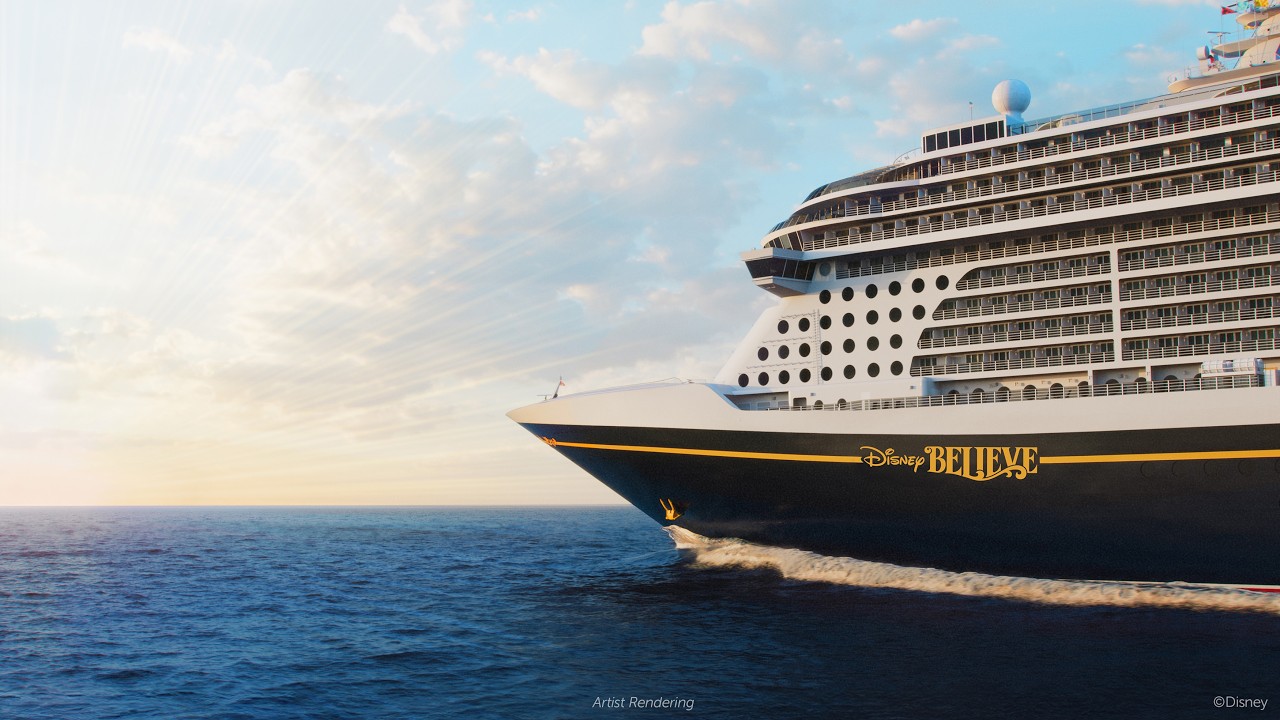

![On...Heartbreak [as] The National Anthem](https://static.wixstatic.com/media/b93b67_513787a3324e404d9e22b027d6fed1f9~mv2.png/v1/fit/w_176,h_124,q_85,usm_0.66_1.00_0.01,blur_3,enc_auto/b93b67_513787a3324e404d9e22b027d6fed1f9~mv2.png)